
Decades ago, I was privileged to go on a rotary exchange to Mexico. When I left on this journey, I knew very little Spanish – Hola, gracious, I could count to 10, and that was about all. So, my first day of school was spent listening without much understanding. During math class, I had a very awkward moment when I knew the teacher had made a mistake and I was trying to communicate as much. Other students were not particularly helpful.
The last class of the day was English. The teacher insisted on communicating solely in English, which was a wonderful relief for me. He knew a Canadian was in the class and asked if I would come up and introduce myself and share a bit about my country. Given the interactions I had had up to that point, I assumed most students had limited capacity to speak English and so I slowly and deliberately introduced myself and shared about Canada. I subsequently learned they had all been taking English since year 1 and they had fun occasionally reminding me of my first day when I told them “Canada is a biiiggg country”.
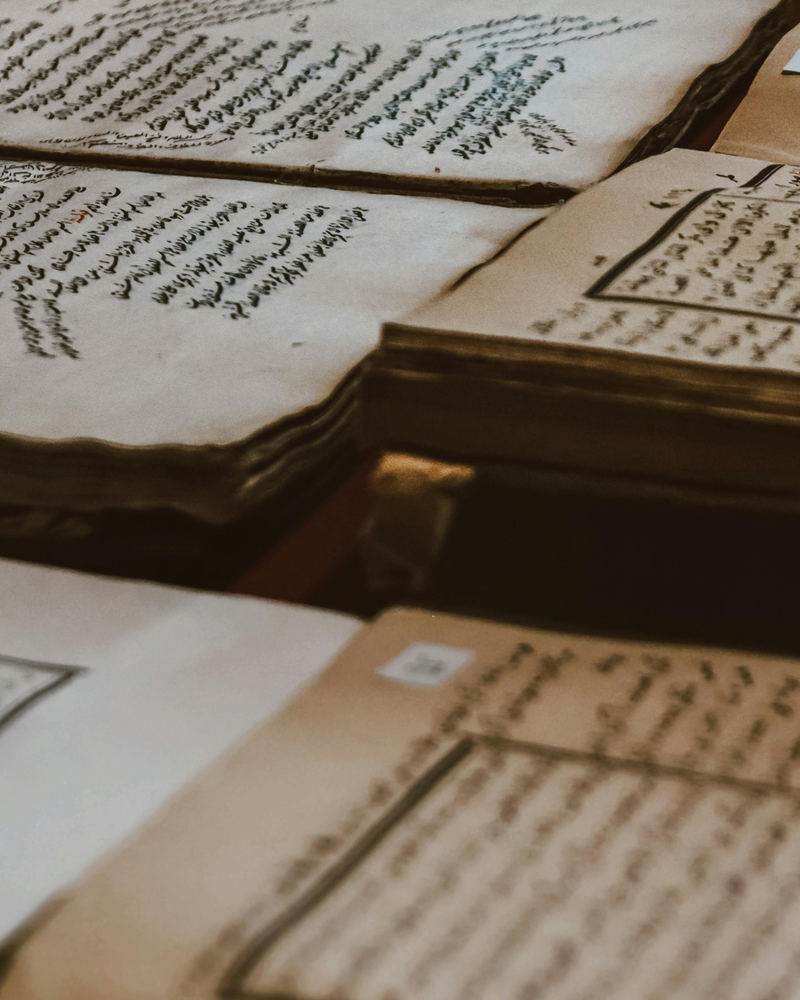
Languages are a powerful tool that can unite or divide. Those of us who have found ourselves in circumstances where we do not know the language being used know we can feel like outsiders, we can feel excluded. There is gift and grace when we encounter those who understand us and whom we understand. Imagine then, the excitement on that first Pentecost morning when so many people from such diverse backgrounds could understand what the disciples were saying: Parthians, Medes, Elamites, and residents of Mesopotamia, Judea and Cappadocia, Pontus and Asia, Phrygia and Pamphylia, Egypt and the parts of Libya belonging to Cyrene, and visitors from Rome, both Jews and proselytes, Cretans and Arabs - in our own languages we hear them speaking about God's deeds of power.
What does this story tell us about the message of Jesus, the Good News as we know it? (It is meant for everyone)
How do we continue to use language to communicate this same message? Note: some things have happened over time, and others are subtle and feel so inclusive that you may not even notice. For example, shifts away from gendered language began decades ago thanks to feminism and the desire to better include women which now enables us to be sensitive to the needs of diverse genders. So, you may notice the use of ‘precious children’, or ‘siblings’, and the avoidance of gender pronouns in reference to God. On the other hand, these are inclusive so you may not notice them at all.
The use of sign language prior to the passing of the peace is another intentional use of language to be inclusive. The invitation to share diverse languages and learn key phrases from time to time – as we have explored the word peace in multiple languages – is another intentional way of expanding our understanding through language. Fundamentally, as a congregation who wants to send a message of love and inclusion, we have engaged intentionally in practices that use language to tell that story.
We know that the Good News of Jesus is for everyone. Language is an important way to communicate this truth. May we continually reflect on the ways we use language so that those we encounter may experience the wonder and grace of hearing the Good News of God’s power and love in and through us. This we pray as we sing: All the Colours of the Rainbow