
Who wants to be a saint? Why or why not? What do we know about saints? What saints do we know?
We view saints as extraordinary individuals whose lives are an example of faithful witness. We see these individuals as holy. We recognise how the things they do reflect their relationship with God. We believe their lives are centred in prayer. We assume that saints exist in a different way than most ‘regular’ people are able to do. We recognise that, for some, this led to martyrdom. We can’t imagine the possibility of achieving the stature of a saint. We may not want the responsibility or consequences of that status.
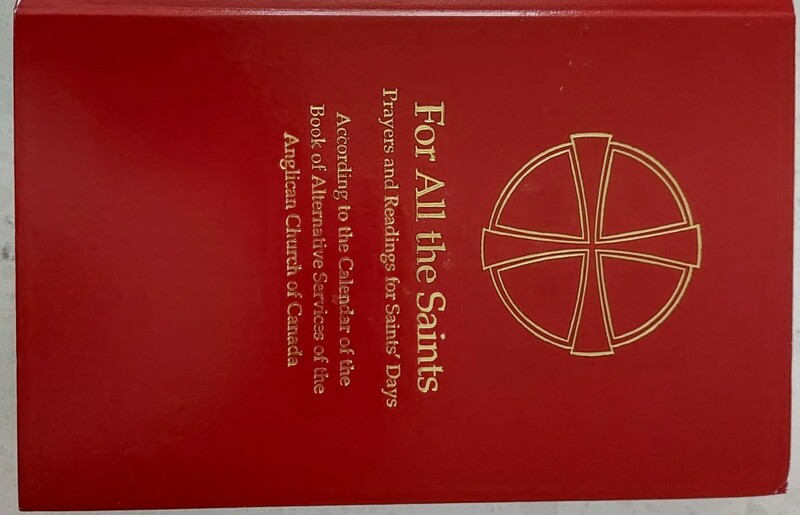
“For All the Saints”, the text we use as a reference for the commemoration of saints begins: “In every time and place God calls women, men, and children to holiness. This vocation, rooted in our baptism, is the summit of Christ’s work in us” (7). God calls people to holiness, to a vocation rooted in our baptism.
We know about the Baptismal Covenant, the commitments we make about how to live our faith. The saints lived this too.
When Thomas Cranmer, an Archbishop of Canterbury wrote the Book of Common Prayer it was to help those who would become part of the Anglican Communion to continue in the apostles’ teaching and fellowship, the breaking of bread, and in the prayers. We could also remember Henry Budd, the first person of the First Nations in Canada to be ordained an Anglican priest and Florence Li Tim-Oi who was the first woman priested in the Anglican Communion (1944) for their efforts in teaching and fellowship.
The story of John the Baptist, which we hear every Advent, offers an important reminder of the ongoing need to repent and return to the Lord.
There are countless saints who proclaimed by word and example the good news of God in Christ – like Florence Nightingale, a nurse who worked in the British field hospitals during the Crimean War to relieve the sufferings of wounded and dying soldiers. Marguerite Bourgeoys who built a school and helped in the foundation of the Congregation de Notre Dame de Montreal.
Hannah Grier Coome was the founder of the Sisterhood of St. John the Divine, an order of Anglican nuns in Canada devoted to personal sanctification and active charity. The order founded a hospital where patients received medical attention free of charge long before OHIP, established a nursing home for the elderly (one of the first in Canada), and took charge of a school for girls. In this they embodied what it means to seek and serve Christ in all persons, loving your neighbour as yourself.
John Chrysostom made efforts to reform the moral character of the clergy and called upon the imperial court to heed the cries of the poor and the hungry living out the call to strive for justice and peace among all people and respect the dignity of every human being.
One of the reasons we have our blessing of the animals around Oct. 4th every year is because that is the day we remember Francis of Assisi, a saint who loved creation.
God calls people to holiness, to a vocation rooted in our baptism. The saints embodied this baptismal calling. None has ever lived this perfectly. Like us, they live it, “with God’s help”. Thus, their lives show us that everyone who seeks to live out their God-given vocation can be a blessing as we are blessed.
May we have the courage to continually seek to live out our baptismal calling inspired by the lives of the saints. This we pray as we sing: (VT) 809 Sing a New World Into Being